Should You Ride Muddy Trails? A Guide to Wet Trail Conditions
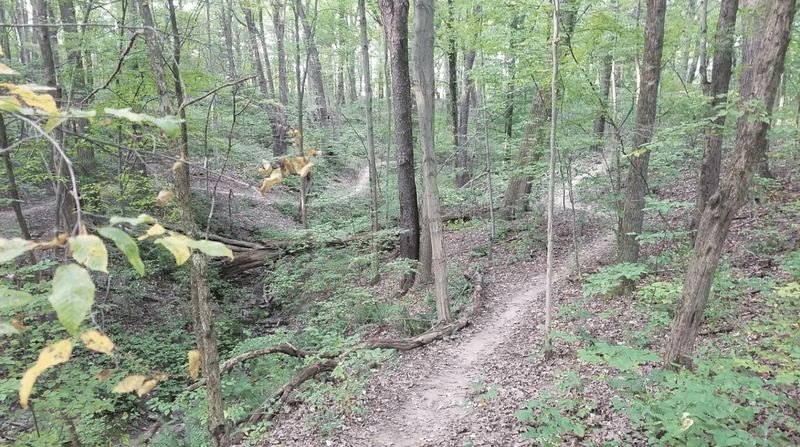
Northeast Ohio gets a lot of rain, and our soils do not always drain quickly. That leaves riders with a familiar question after every storm: are the trails rideable yet? Riding soft, muddy trails may feel like a fun challenge, but it causes damage that volunteers then have to repair by hand, sometimes for weeks.
This guide explains why wet trails are so easy to damage, how to judge conditions, and what to do instead when the dirt is not ready.
Why Muddy Trails Get Damaged So Easily
A well-built trail has a firm, compacted surface called the tread. When the soil underneath is saturated, that surface loses its strength. A tire rolling over soft tread does not just leave a mark; it pushes soil to the sides and digs a groove.
- Ruts form. Tire tracks in soft soil harden into ruts when the trail dries. Ruts are rough to ride and channel water down the trail during the next rain.
- Water gets trapped. Trails are designed to shed water sideways. Ruts and dips break that design and let water run along the tread, causing erosion.
- Trails get wider. When riders go around muddy spots, they trample vegetation at the edge. The trail widens, the puddle grows, and the cycle repeats.
- Roots and rocks get exposed. Erosion washes away soil and leaves roots and rocks sticking up, which changes how the trail rides and makes it harder to maintain.
A single rider may not seem to do much damage, but a busy weekend on a soft trail can undo months of volunteer work.
How to Judge Trail Conditions
Check reports before you drive
The easiest step is to check before you leave home. For the trails RBRTC maintains, look for updates in the RBRTC Facebook group, where volunteers and riders post condition reports and closures. Trail apps like Trailforks also show recent condition reports from other riders.
Consider the recent weather
How long a trail takes to dry depends on how much rain fell, the soil type, temperature, wind, sun and tree cover. A light shower on a warm, breezy summer day might dry quickly. A long soaking rain in spring or late fall, when evaporation is slow, can leave trails soft for several days. Low areas near creeks and lakes usually stay wet longest.
Use the footprint test
When you reach the trailhead, look at the dirt. If your shoes sink in, leave clear prints or pick up sticky mud, the trail is too soft. If tires ahead of you have left deep tracks, turn around.
Watch for signs on the trail
If you start a ride and find mud sticking to your tires, standing water across long stretches, or tires cutting into the surface, end the ride and head back the shortest way. There is no shame in cutting a ride short to protect the trail.
Freeze and Thaw: Ohio's Tricky Season
Winter and early spring bring freeze-thaw cycles. A trail can be frozen solid and rideable early in the morning, then turn into soft, sloppy mud by afternoon once the sun warms the surface. The ground underneath may still be frozen, so water cannot drain down and stays on top.
- Frozen trails can be great to ride, but plan to finish before the surface thaws.
- If you notice the top layer getting soft and sticky, head back.
- Snow-covered trails are a different story. Follow local guidance, because riding and packing snow can affect how trails drain in spring.
Our fall and winter riding guide has more on cold-weather riding.
What to Do if You Hit a Wet Spot
Even on a dry day, you might find a puddle or a muddy low area. When that happens:
- Ride straight through the middle. Riding around puddles widens the trail and damages the edges.
- Do not skid. Brake before the wet spot and roll through smoothly.
- Walk carefully if needed, staying on the tread.
- Report persistent wet spots to the trail organization. A spot that never dries may need a drainage fix, which is exactly the kind of work volunteers can plan for.
What to Ride Instead
A wet day does not have to be a lost day. Some alternatives:
- Paved trails and bikeways. The Youngstown area has paved multi-use paths that are rideable in almost any weather.
- Gravel and back roads. A gravel ride can be a great workout on a mountain bike.
- Skills practice. Work on cornering, braking or track stands in a parking lot or at home.
- Bike maintenance. Clean and lube your drivetrain, check your brake pads and fix that creak. See our pre-ride checklist for ideas.
- Trail work. Some trail tasks, such as planning a reroute or clearing brush, can happen on days when riding is not a good idea. Watch our Events page for work days.
Respect Trail Closures
Sometimes a land manager or trail organization closes a trail after heavy rain, during construction or for other reasons. Those closures protect both riders and the trail. Riding a closed trail can damage fresh work and can make land managers less willing to allow mountain biking in the future. Always respect posted closures.
Why It Matters to Volunteers
At Rust Belt Revival Trail Coalition, trail work is done by volunteers who give up their weekends to clear trees, fix drainage and rebuild damaged tread. Every rut that forms on a wet day adds to that list. Choosing to wait a day or two after heavy rain is one of the simplest and most valuable ways any rider can support local trails.
If you want to do even more, join a trail day. Our guide to your first trail work day explains what to expect, and how sustainable trails are built shows why good drainage matters so much.
Summary
Muddy trails are fragile. Riding them causes ruts, erosion and wider trails that take a lot of volunteer effort to fix. Check condition reports before you go, look for sticky mud and deep prints at the trailhead, ride through puddles rather than around them, avoid the afternoon thaw in winter, and respect closures. When the dirt is not ready, ride pavement or gravel, work on your bike, or come help the volunteers who keep our trails in shape.
Ride With Us, Build With Us
Rust Belt Revival Trail Coalition is a volunteer IMBA chapter that builds and maintains mountain bike trails near Youngstown, Ohio. Join a trail day, become a member or follow along in our Facebook group.